(Currently not fully documented, see the keymappings list for more.)
Vim-like registers can be used to yank and store text to be pasted later. Usage is similar, with " being used to select a register:
"ay - Yank the current selection to register a."op - Paste the text in register o after the selection.
If there is a selected register before invoking a change or delete command, the selection will be stored in the register and the action will be carried out:
"hc - Store the selection in register h and then change it (delete and enter insert mode)."md - Store the selection in register m and delete it.
| Register character |
Contains |
/ |
Last search |
: |
Last executed command |
" |
Last yanked text |
There is no special register for copying to system clipboard, instead special commands and keybindings are provided. See the keymap for the specifics.
Functionality similar to vim-surround is built into
helix. The keymappings have been inspired from vim-sandwich:
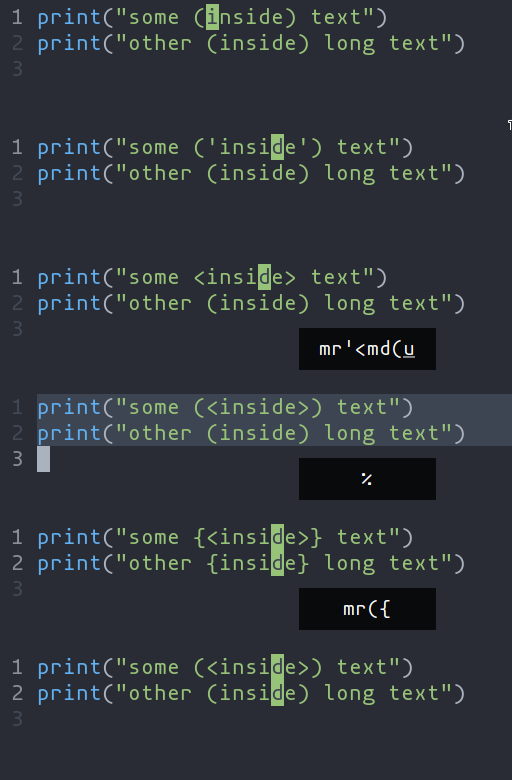
ms - Add surround charactersmr - Replace surround charactersmd - Delete surround characters
ms acts on a selection, so select the text first and use ms<char>. mr and md work
on the closest pairs found and selections are not required; use counts to act in outer pairs.
It can also act on multiple seletions (yay!). For example, to change every occurance of (use) to [use]:
% to select the whole files to split the selections on a search term- Input
use and hit Enter
mr([ to replace the parens with square brackets
Multiple characters are currently not supported, but planned.
Currently supported: word, surround.

ma - Select around the object (va in vim, <alt-a> in kakoune)mi - Select inside the object (vi in vim, <alt-i> in kakoune)
Key after mi or ma |
Textobject selected |
w |
Word |
(, [, ', etc |
Specified surround pairs |
Textobjects based on treesitter, like function, class, etc are planned.